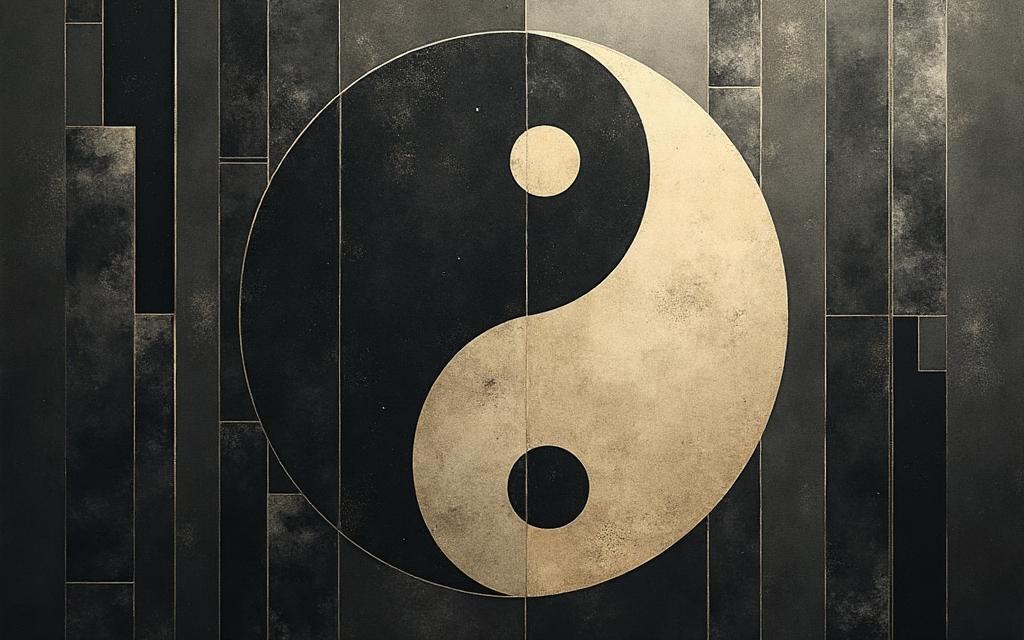
Business is often framed as a purely technical pursuit.
Strategy, execution, incentives.
In reality, how people build and run businesses is deeply influenced by philosophy—whether acknowledged or not.
Eastern and Western traditions approach work, leadership, and success from very different angles. When taken in isolation, each has blind spots. When combined thoughtfully, they create a far more durable way of building.
The Western Strength: Agency and Action
Western business culture is built on action.
Decide.
Move.
Build.
Compete.
There is a strong belief in individual agency—the idea that progress is created through initiative, ownership, and the willingness to act in uncertain conditions. This mindset rewards speed, accountability, and measurable outcomes.
At its best, Western thinking produces:
- Clear ownership
- Direct responsibility
- Bias toward execution
- Comfort with risk
Without this orientation, ideas stay theoretical. Nothing gets built. Momentum never forms.
The West understands something essential: progress requires action.
The Western Blind Spot: Over-Optimization
The same mindset that drives action can also undermine durability.
When taken too far, Western business culture:
- Overvalues speed
- Confuses confidence with clarity
- Treats people as resources instead of participants
- Optimizes for short-term outcomes
Everything becomes measurable. Everything becomes urgent. Reflection is viewed as inefficiency.
The result is often impressive growth followed by fragility.
The Eastern Strength: Balance and Restraint
Eastern philosophies approach work from a different starting point.
Rather than asking, "How fast can we move?" they often ask, "What happens if we move too fast?"
There is an emphasis on:
- Balance
- Harmony
- Patience
- Long-term consequences
In business, this shows up as respect for systems, awareness of second-order effects, and a reluctance to force outcomes before conditions are ready.
Eastern thinking understands that:
- Not all progress is linear
- Stability matters
- Force often creates resistance
At its best, this mindset produces businesses that are calm, resilient, and difficult to destabilize.
The Eastern Blind Spot: Excessive Caution
Balance can become hesitation.
When restraint turns into avoidance, opportunity is lost. Decisions get deferred. Responsibility becomes diffuse. Momentum stalls.
In business, patience without action can look like wisdom while quietly becoming stagnation.
Without a willingness to commit, build, and take risk, even the most thoughtful systems fail to evolve.
Where the Two Meet
The strongest operators don't choose between East and West.
They integrate both.
From the West:
- Ownership
- Decisiveness
- Execution
- Willingness to act
From the East:
- Restraint
- Awareness of impact
- Long-term thinking
- Respect for systems
Together, they form a discipline that looks like this:
- Act—but not recklessly
- Move—but not blindly
- Build—but not at the expense of stability
- Decide—but with awareness of consequences
This combination produces businesses that grow without breaking.
Strategy Is Western. Longevity Is Eastern.
Western thinking excels at strategy—choosing direction, allocating resources, and moving decisively.
Eastern thinking excels at longevity—maintaining balance, preserving trust, and avoiding collapse under pressure.
When strategy ignores longevity, scale becomes fragile.
When longevity ignores strategy, relevance fades.
Durable businesses require both.
Leadership Through This Lens
Leaders influenced by both traditions tend to:
- Take responsibility without ego
- Make decisions without urgency
- Value clarity over noise
- Treat people as part of the system, not inputs
They understand that leadership is not about constant motion. It's about timing, judgment, and knowing when not to act.
This creates trust—internally and externally.
Building for the Long Term
Eastern philosophy reminds us that nothing exists in isolation. Every decision affects the system.
Western philosophy reminds us that systems don't improve on their own.
Building for the long term requires action informed by restraint, and restraint supported by courage.
That balance is rare.
And increasingly valuable.
Final Thought
The future doesn't belong to businesses that move the fastest or wait the longest.
It belongs to those that can act decisively without losing balance.
Western philosophy teaches us how to build.
Eastern philosophy teaches us how to sustain.
The strongest businesses—and the strongest leaders—learn from both.
That's not compromise.
It's maturity.